
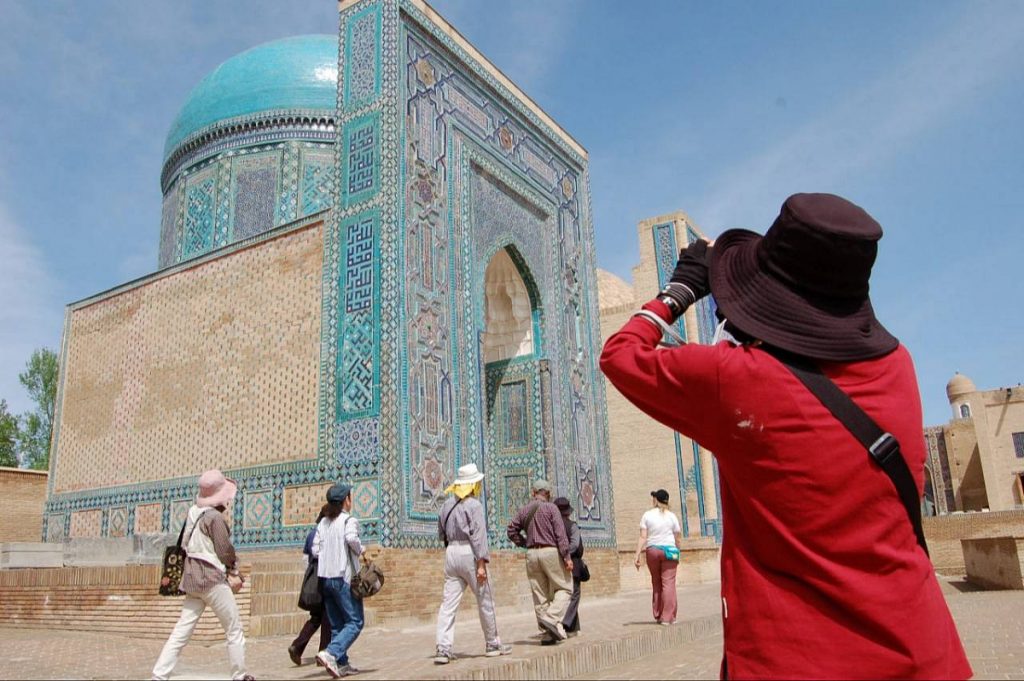
There are a multitude of different options and examples in the world when it comes to economic specialization. Some countries, including many post-Soviet ones, such as Kazakhstan, Russia, Azerbaijan, and Turkmenistan based their economies on hydrocarbons, exporting oil, gas, and associated products. Others specialize in finance, heavy or light manufacturing, agriculture, and other fields. While it is highly debatable how different economic specializations compare with each other, it is undeniable that the most sustainable and balanced growth comes from economic diversification (Delechat et al., 2024). For instance, most of the world’s richest economies in terms of GDP per capita are highly diversified and their economic power lies in numerous pillars, such as manufacturing, financial, and IT sectors. On the other hand, some of the least successful economies in the world, excluding failed states, are mostly those that specialize in one sector, such as agriculture or mining (FocusEconomics, 2024). However, diversification implies the existence of comparative advantages in areas into which a country wants to diversify. For instance, it is hard to imagine any of the Central Asian countries suddenly diversifying into high-end computer chip manufacturing because there is no basis for that. Yet, there is one sphere into which most of the region’s countries can diversify relatively successfully, as they have something unique and interesting to offer to the world – tourism.
The potential of tourism is immense, as it already represented at least 10% of the world economy in 2024 and supported about 348 million jobs worldwide (Oladipo, 2024). The sector is only projected to grow further from that point. This introduces limitless potential to harvest for the countries that are looking to diversify their economies. Central Asian countries have already tapped into that potential in recent years. For instance, according to Kazinform (2024), the inflow of foreigners to Kazakhstan has reached 11.5 million people by the end of 2024, which almost doubles the previous year’s peak, making Kazakhstan the undisputed regional leader in terms of attraction of incomers. However, it is necessary to note that not all those people can be considered tourists. For instance, only about a million people officially registered as tourists in hotels, hostels, and other official places of accommodation that did share their data with the officials (Atameken, 2025). Regarding international tourists, there are three main countries from which the tourists come: the Russian Federation (307,756 people), China (127,059 people), and India (91,148 people) (Nitaliev, 2025). One of the highlights here is China, which demonstrated a 78% growth in the number of tourists in 2024, probably because of a visa-free regime implemented in 2023 and subsequent tourist-attracting events, exhibitions, and conferences held in the People’s Republic of China in 2024 (Atameken, 2025).
The growing trend has also spread to the domestic tourist market in the same year, about 6 million Kazakhstanis traveled within the country, a half-million people year-to-year increase compared to 2023 (PrimeMinister.kz, 2024). Due to this fact, it is impossible to associate the overall tourist inflow growth with just external factors, such as a fickle and temporary fashion for nomadic cultures and eco-tourism, especially considering the recent years’ shaky global economic outlook. Thus, it seems that impactful improvements have been made locally in terms of tourist infrastructure and marketing, as these are some of the main factors that influence the decisions of international tourists. These assumptions can be backed by data, such as that the investments in tourism increased by at least 33.6% in 2024, resulting in the growth of bed numbers available for tourists and expansion in the number of projects, events, and sights meant to support the regional tourist capabilities (PrimeMinister.kz, 2024). Another positive sign of the growing role of Kazakhstan in the international tourism sector is the country’s global ratings in the specialized tourist rankings and the number of publications in international media about Kazakhstan as an attractive place to travel to. For instance, Kazakhstan has climbed to 52nd position in the World Economic Forum’s 2024 Travel and Tourism Development Index (Kazinform, 2024). Regarding international media, CNN Travel recently included Almaty in its list of the best places to visit in 2025 (CNN Travel, 2025), and so did the New York Times in 2024, placing Almaty 25th in its rankings of 52 places worth visiting in 2024 (The New York Times, 2024).
Regarding the challenges in the sphere that are to be tackled to ensure further growth, those include high seasonality of tourism, additional improvements in both physical and digital infrastructure, and management of tourist numbers that currently overwhelm some tourist sights in peak periods (Royal Thai Embassy in Astana, 2024). Moreover, further expansion of currently available resorts and recreational areas is imperative to ensure the comfortability of everyone’s rest. All these issues are critically important to maintain the level of growth of the tourist sector which may, at some point, become a crucial part of the economy, helping it to diversify away from hydrocarbons.
Regarding other Central Asian countries, Kyrgyzstan is the next most popular destination for foreign citizens in Central Asia, with around 8.6 million visitors in 2024, which slightly surpasses Uzbekistan (Economist. kg, 2025). However, the growth compared to the previous year is insignificant, with only 80,000 additional visitors, indicating market saturation. Similarly to Kazakhstan, not all those people are tourists, as Kyrgyz authorities include people who come to the country for personal or business purposes in the “tourist” category. Thus, it is difficult to differentiate and identify the exact number of foreigners who came to the country exclusively for leisure. Most of those foreigners came from Uzbekistan (~62%), Kazakhstan (28%) and Russia (~6%), and their numbers peaked in the third quarter of the year, with 2.8 million people visiting the Kyrgyz Republic across July, August and September, demonstrating a clear seasonality of tourist inflows in the country. Overall, the share of Kyrgyzstan in Central Asian tourism is surprisingly high, considering the country’s much smaller economy. Yet, it seems that the country does not experience growth in the tourism sector comparable to its neighbors, risking falling behind some of the regional competitors shortly. In the comprehensive 2017 paper by Nazgul Jenish that might still be relevant to the country’s tourism sector, a multitude of problems that contribute negatively to the issue have been identified, those include poor infrastructure and quality of services, weak marketing, short seasonality, administrative barriers to start and run a tourism business, and environmental pollution. Due to these problems, local experts stated that Kyrgyzstan was realizing no more than 15-20% of its tourist potential. Accordingly, the primary recommendation for the government of Kyrgyzstan is to increase the quantity and quality of long-term investments in the sector, gradually improving the physical and virtual infrastructure for foreign guests.
As already mentioned before, Uzbekistan was only slightly below Kyrgyzstan in 2024, with approximately 8.2 million international visitors attracted, with an overwhelming majority of those coming from neighboring countries of Kyrgyzstan, Tajikistan, Kazakhstan, Russia, and Turkmenistan (Daryo, 2025). This indicates a significant rise against the previous year’s peak of approximately 4.7 million, and it is the first time after the quarantine that the number of visitors has surpassed the pre-pandemic level (Travel and Tour World, 2024). Diving deeper into the numbers, it seems that most people who visited the country aimed to visit relatives. At the same time, only around 15% of the foreigners came with exclusively tourist purposes (Ranking.kz, 2024). Two main cities that attracted the most attention were Tashkent and Buhara with 29 and 25 interesting tourist sights, respectively, according to the participants of the research. The industry’s growth in Uzbekistan was mainly based on the same pillars as in Kazakhstan – the country has been gradually increasing investments in infrastructure and marketing. For instance, for the first time in history, Uzbekistan hosted the United Nations World Tourism Organization’s General Assembly in the city of Samarkand in October 2024, which demonstrated the Uzbek government’s dedication to the cause (Embassy of the Republic of Uzbekistan to the Republic of Kazakhstan, n.d.).
Approximately 1.6 million foreigners visited Tajikistan in 2024, out of which, according to Tajik authorities, 1.4 million people were tourists (Interfax, 2025). However, the criteria for inclusion into the tourist category are unclear. Yet, it is safe to assume that just like in other countries of the region, most of the incoming people, regardless of their actual purposes, are included in the “tourist” category. This demonstrates a sizable year-to-year growth of 19% (Daryo.uz, 2024). Out of those more than 90% came from CIS countries, mainly Uzbekistan (~897,300), Russia (334,500), and Kazakhstan (34,600). The specifics of Tajik tourism can differ to some extent from its neighbors, for example, in 2023, the country was nominated as “The most attractive country in Asia for mountaineering tourism” (halva.tj, 2023), which implies a more extreme type of tourism.
Turkmenistan possesses significant cultural and historical attractions and has immense potential to develop tourism. For instance, the Secretary-General of the United Nations World Tourism Organization praised the country for its hospitality, achievements, and potential in the sphere of tourism during his first visit to the country (Turkmenportal, 2024). Researchers agree that Turkmenistan can attract a lot of foreigners due to its natural, architectural, and recreational sights. Yet, they see government restrictions as the main barrier that prevents such an inflow – the country has a strict visa policy, which also restricts the mobility of potential tourists inside a country; moreover, it is impossible to just apply for Turkmen visa – a person should be “invited” by someone from Turkmen side (Dorokhova and Belliev, 2024). As a result, while statistics for the country are lacking and some of the only open sources claim that tourists are between 6,000 and 15,000 a year (Road to 197, n.d.), Turkmenistan remains the least visited destination in the Central Asian region.
Thus, it is possible to conclude that practically all Central Asian countries can be attractive for specific types of tourism and have pretty good potential for its development. Great success is achieved when the government purposefully invests in this sector, develops infrastructure, conducts attractive international events, and removes bureaucratic barriers for foreign tourists. The importance of diversification of the economy and promising prospects motivate responsible leaders to actively and quickly implement planning and investment in the tourism industry.
References
Atameken (2025). Tourism in Kazakhstan: Records of 2024 and prospects for 2025. Retrieved from https://atameken.kz/ru/news/53646-turizm-v-kazahstane-rekordy-0-goda-i-perspektivy-na-0. Accessed on 14.02.2025.
CNN Travel (2025). Best travel destinations to visit in 2025. Retrieved from https://edition.cnn.com/travel/best-destinations-to-visit-2025/index.html. Accessed on 16.02.2025.
Daryo.uz (2024). Tourist flow to Tajikistan increased by 19% in 2024. Retrieved from https://daryo.uz/ru/2024/10/23/19%25-2024. Accessed on 14.02.2025.
Daryo.uz (2025). Tourist arrivals in Uzbekistan hit 8.2mn in 2024. Retrieved from https://daryo.uz/en/2025/02/03/tourist-arrivals-in-uzbekistan-hit-82mn-in-2024. Accessed on 14.02.2025.
Delechat, Corinne, Melina, Giovanni, Newiak, Monique, Papageorgiou, Chris and Spatafora, Nicola (2024). Economic diversification in developing countries: Lessons from country experiences with productive transformation. Retrieved from https://www.imf.org/en/Publications/Departmental-Papers-Policy-Papers/Issues/2024/07/20/Economic-Diversification-in-Developing-Countries-Lessons-from-Country-Experiences-with-532135. Accessed on 14.02.2025.
Economist.kg (2025). How many tourists visited Kyrgyzstan in 2024: Data from the Tourism Fund. Retrieved from https://economist.kg/novosti/2025/01/18/skolko-turistov-posietilo-kyrghyzstan-v-2024-ghodu-dannyie-fonda-turizma/. Accessed on 14.02.2025.
Embassy of the Republic of Uzbekistan to the Republic of Kazakhstan (n.d.). UNWTO General Assembly to be held in Uzbekistan for the first time in history. Retrieved from https://uzembassy.kz/en/article/unwto-general-assembly-to-be-held-in-uzbekistan–for-the-first-time-in-history. Accessed on 16.02.2025.
FocusEconomics (2024). The poorest countries in the world. Retrieved from https://www.focus-economics.com/blog/the-poorest-countries-in-the-world/. Accessed on 15.02.2025.
Halva.tj (2023). Tajikistan became the most attractive country in Asia for mountaineering tourism. Retrieved from https://halva.tj/news/tadzhikistan_stal_samoy_privlekatelnoy_stranoy_azii_dlya_alpinistskogo_turizma/. Accessed on 16.02.2025.
Jenish, Nazgul (2017). Tourism Sector in Kyrgyzstan: Trends and Challenges. University of Central Asia. Retrieved from uca-ippa-wp42tourismeng.pdf. Accessed on 16.02.2025.
Kazinform.kz (2024). 11.5 million foreign tourists visited Kazakhstan in 2024. Retrieved from https://www.inform.kz/ru/115-mln-inostrannih-turistov-posetili-kazahstan-v-2024-godu-e8e278. Accessed on 15.02.2025.
Kazinform.kz (2024). Kazakhstan ranked 52nd in the global travel and tourism ranking for 2024. Retrieved from https://en.inform.kz/news/kazakhstan-ranked-52nd-in-the-global-travel-and-tourism-ranking-for-2024-a0a1af/. Accessed on 14.02.2025.
Nitaliev, Timur (2025). Which countries’ tourists visited Kazakhstan the most in 2024? Retrieved from https://ulysmedia.kz/ulys-travel/46728-turisty-iz-kakikh-stran-poseshchali-kazakhstan-bolshe-vsekh-v-2024-godu/. Accessed on 15.02.2025.
Oladipo, Doyinsola (2024). Travel industry to contribute record $11 trillion to global GDP in 2024. Retrieved from https://www.reuters.com/business/travel-industry-contribute-record-11-trillion-global-gdp-2024-2024-09-03/. Accessed on 16.02.2025.
PrimeMinister.kz (2024). Year-end results: 6 million domestic tourists and revenues of 224 billion tenge strengthened Kazakhstan’s tourism. Retrieved from https://primeminister.kz/ru/news/reviews/itogi-goda-6-mln-vnutrennikh-turistov-i-dokhody-v-224-mlrd-tenge-ukrepili-turizm-kazakhstana-29439. Accessed on 16.02.2025.
Ranking.kz (2024). Inbound tourism in Uzbekistan nearly returns to pre-pandemic levels. Retrieved from https://ranking.kz/reviews/industries/vezdnoy-turizm-uzbekistana-pochti-vernulsya-k-pokazatelyam-perioda-do-pandemii.html. Accessed on 15.02.2025.
Roadto197 (2019). Trip report: Turkmenistan – Country #85. Retrieved from https://www.roadto197.com/2019/05/01/trip-report-turkmenistan/. Accessed on 14.02.2025.
Royal Thai Embassy in Astana (2024). Tourism indicators in Kazakhstan for the first half of 2024. Retrieved from https://image.mfa.go.th/mfa/0/iyOJNVBddx/E-book/3._Moldir_Tourism_Indicators_in_Kazakhstan_for_the_First_Half_of_2024.pdf. Accessed on 18.02.2025.
Note: The views expressed in this blog are the author’s own and do not necessarily reflect the Institute’s editorial policy.