
Iran’s nuclear program has long been a central issue in international relations, serving as a major source of tension between Iran and the West. It represents a protracted and unresolved process marked by a series of complex events and diplomatic challenges. Therefore, analyzing the current developments—particularly those of 2025—without addressing the program’s historical background would be insufficient. In this context, the present study aims to examine key historical milestones in order to provide a comprehensive analysis of the events unfolding in 2025.
Iran’s nuclear program was initiated in the 1950s under Shah Mohammad Reza Pahlavi with support from the United States as part of President Dwight D. Eisenhower’s “Atoms for Peace” initiative, which promoted the peaceful use of nuclear technology. In 1967, the Tehran Nuclear Research Center was established to advance civilian nuclear research. Iran became a member of the International Atomic Energy Agency (IAEA) in 1958, allowing for regular inspections. Furthermore, by signing the Treaty on the Non-Proliferation of nuclear weapons (NPT) in 1968 and ratifying it in 1970, Iran committed to limiting its nuclear activities to peaceful purposes under international oversight. In 1974, Iran further reinforced this commitment by signing a comprehensive safeguards agreement with the IAEA. That same year, the government unveiled its first national nuclear energy development plan, which aimed to construct 22 nuclear reactors with a combined capacity of approximately 20 gigawatts (GW) (Council on Foreign Relations, 2025). Consequently, Iran was soon identified by Western intelligence agencies and IAEA experts as a “threshold state”—a country with the technical capability to produce weapons-grade uranium if it chose to do so (Fuhrmann, 2009).
Between 1992 and 1993, the United States and Israel publicly accused Iran of pursuing a covert military nuclear program for the first time, while Iranian officials maintained that their nuclear activities were intended for peaceful purposes (Huang, 2016). Tensions escalated in 2003 when the IAEA discovered undeclared uranium enrichment facilities in Iran, whose capacity appeared to exceed civilian needs (IAEA, 2003). Iran later admitted to conducting both centrifuge and laser-based enrichment experiments. That same year, under mounting international pressure, Iran signed the Additional Protocol to the NPT and agreed to suspend uranium enrichment and heavy water production in line with IAEA recommendations (Kerr, 2009).
In 2005, following the election of Mahmoud Ahmadinejad as President, Iran resumed its nuclear activities and substantially reduced its engagement in diplomatic negotiations. This shift prompted the IAEA to issue a resolution citing Iran’s non-compliance with its nuclear safeguards’ obligations (IAEA, 2005). In response, the United Nations Security Council (UNSC) imposed a series of sanctions between 2006 and 2010, including bans on arms exports to Iran and restrictions on the import of nuclear-related materials and technologies (UNSC Resolutions 1696 [2006], 1737 [2006], 1747 [2007], 1803 [2008], 1929 [2010]).
Concurrently, the United States and the European Union imposed extensive unilateral sanctions targeting nearly all sectors of the Iranian economy, including trade, finance, technology, and energy (Katzman, 2020). Despite these comprehensive restrictions, Iran successfully completed the development of a full nuclear fuel cycle. This milestone prompted Tehran to re-enter negotiations with Western powers in an effort to ease tensions and seek a diplomatic resolution.
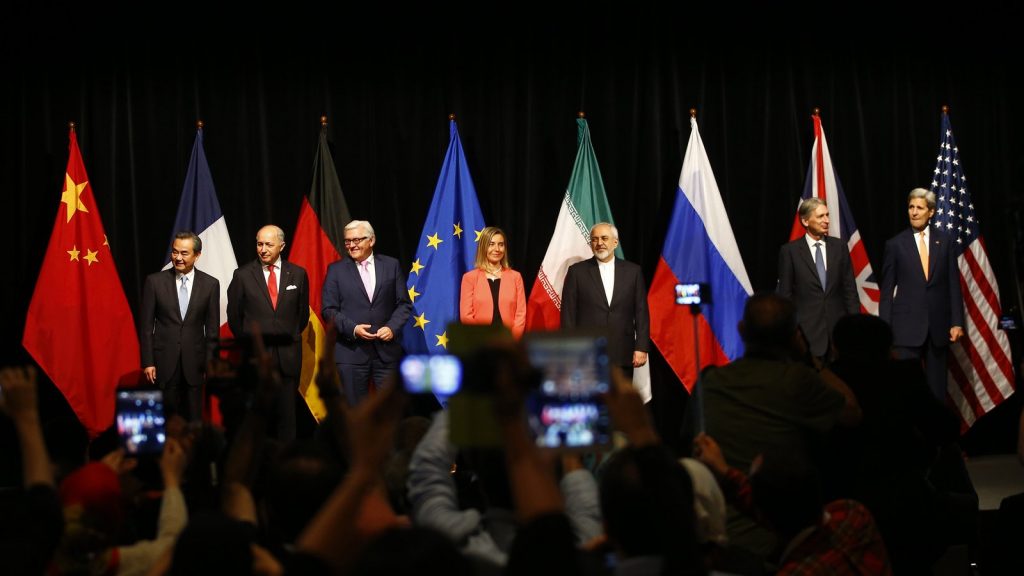
In 2015, Iran and the P5+1 group—comprising the United States, the United Kingdom, France, Russia, China, and Germany—reached the Joint Comprehensive Plan of Action (JCPOA), a landmark agreement aimed at resolving the nuclear dispute. Under the terms of the JCPOA, Iran agreed to limit its nuclear program and submit to long-term international monitoring in exchange for the gradual lifting of economic sanctions. The agreement was formally signed on July 14, 2015, and subsequently endorsed by United Nations Security Council Resolution 2231 (UNSC, 2015).
In May 2018, the United States (US) unilaterally withdrew from the JCPOA under President Donald Trump’s administration and reimposed comprehensive sanctions on Iran. Although Tehran initially continued to comply with the agreement for nearly a year, it gradually resumed its nuclear activities beginning in May 2019. Iran began restoring the operational capacities of key facilities previously limited under the JCPOA, including the uranium enrichment site at Natanz, the heavy water reactor at Arak, and the underground plant at Fordow. Following the collapse of the agreement, Iran significantly expanded its enrichment capabilities, reportedly reaching uranium purity levels of up to 60% at Natanz by April 2021—far exceeding the JCPOA’s 3.67% limit (IAEA, 2021). In November 2024, Tehran notified the IAEA of plans to install an additional 6.000 centrifuges at the facility (Albright, Burkhard and Faragasso, 2024). Moreover, by February 2021, Iran had severely restricted IAEA access to its nuclear sites, effectively suspending regular inspections and reducing transparency.
In April 2021, the Biden administration initiated indirect negotiations with Iran in Vienna with the objective of reviving the JCPOA (Erlanger, 2021). These talks, facilitated by the European Union, brought together the remaining P5+1 countries, as well as Iran. Although US officials did not engage directly with their Iranian counterparts, they participated through intermediaries, working closely with the other signatories to outline a roadmap for mutual compliance and a phased return to the agreement’s original terms. Despite these concerted efforts, the negotiations ultimately failed to produce a breakthrough, highlighting the enduring complexities surrounding the JCPOA’s restoration.
As of today, Iran possesses the technical capabilities, expertise, and access to fissile materials necessary to develop weapons of mass destruction. The accelerating accumulation of highly enriched uranium has raised concerns even among traditionally neutral or cautious states. Given this context, any significant external pressure or internal political upheaval could prompt Iranian leadership to cross the critical threshold and decide to weaponize its nuclear program. According to IAEA estimates, Iran’s enriched uranium stockpile would be sufficient to manufacture roughly six nuclear weapons (Eisenstadt, 2024).
On April 12, 2025, the United States and Iran launched a series of negotiations aimed at reaching a peaceful nuclear agreement, following a letter from President Donald Trump to Iran’s Supreme Leader, Ayatollah Ali Khamenei (Fassihi, 2025). The letter set a 60-day deadline for Iran to reach an agreement. The first round of high-level talks took place in Muscat on April 12, 2025, led by US Special Envoy Steve Witkoff and Iranian Foreign Minister Abbas Araghchi. At the time, both the Iranian Foreign Ministry and the White House described the discussions as constructive.
The second round of negotiations, mediated by Oman, was held in Rome on April 19, 2025, once again involving indirect talks between Witkoff and Araghchi (Motamedi, 2025). This was followed by a third high-level round in Muscat approximately a week later, alongside a technical meeting aimed at drafting the framework for a potential nuclear agreement. The expert-level talks were led by Michael Anton for the United States and Majid Takht-Ravanchi for Iran.
The central point of contention between the two sides remains Iran’s uranium enrichment activities. Iran seeks the lifting of sanctions in exchange for limiting its nuclear program to a level that would prevent it from developing a nuclear weapon. The United States, however, proposed a deal requiring the complete cessation of Iran’s enrichment activities—a proposal Iran rejected, stating that it crossed its “red lines”. Tehran indicated it was preparing a formal response, including its own counterproposal. Iran announced that the talks—temporarily paused due to the U.S. insistence on halting all enrichment—would resume on June 15 in Oman (Mahdi, 2025).
On May 31, the IAEA reported that Iran had amassed a record quantity of weapons-grade enriched uranium. On June 12, the IAEA declared that Iran was in violation of its non-proliferation commitments (Murhpy, 2025). In the early hours of June 13, 2025, following the expiration of the 60-day deadline, Israel launched large-scale attacks on Iranian nuclear facilities and the residences of senior Iranian nuclear scientists. The Israel Defense Forces stated that the operation was carried out in response to Iran having “significantly advanced” its nuclear weapons development. In the aftermath of the attacks, Iran announced the indefinite suspension of nuclear negotiations (Rezaei, Reddy and Campa, 2025).
The recent Israeli strikes targeting Iran’s nuclear infrastructure primarily inflicted pinpoint damage on above-ground storage facilities, power supply systems, and communication networks. However, neither Israel nor any other state currently possesses the capability to fully eliminate Iran’s nuclear program, as a significant portion of its facilities are located underground and are heavily fortified against aerial or missile attacks (Eisenstadt, Palti, Ross and Stroul, 2025).
Natanz hosts one of Iran’s primary uranium enrichment facilities, comprising both above-ground and underground installations. Thousands of centrifuges operate at this site, which sustained damage during recent Israeli strikes but continues to function. In Isfahan, a major nuclear technology center is located, housing a uranium conversion plant as well as research facilities dedicated to nuclear fuel production.
The escalation of tensions between Israel and Iran has significantly diminished the prospects of resolving the Iranian nuclear issue through diplomatic means. Tehran increasingly questions the sincerity and constructiveness of negotiations, while the United States maintains stringent preconditions, and Israel continues to exert unilateral pressure. Concurrently, Iran’s growing stockpile of enriched uranium and the reduction in international oversight have further obscured the prospects for de-escalation. If the conflict can be contained and regional stability restored, a return to negotiations remains theoretically possible. However, under conditions of ongoing escalation, the likelihood of reaching a renewed agreement appears increasingly remote and uncertain.
References:
Albright, David, Burkhard, Sarah and Faragasso, Spencer (2024). Analysis of IAEA Iran verification and monitoring report. Retrieved from https://isis-online.org/uploads/isis-reports/documents/Analysis_of_May_2025_IAEA_Iran_Verification_Report_FINAL.pdf. Accessed on 20.06.2025.
Council on Foreign Relations (2025). US relations with Iran. Retrieved from https://www.cfr.org/timeline/us-relations-iran-1953-2025. Accessed on 20.06.2025.
Eisenstadt, Michael (2024). If Iran gets the bomb. Retrieved from https://www.washingtoninstitute.org/sites/default/files/pdf/PolicyFocus181Eisenstadt.pdf. Accessed on 20.06.2025.
Eisenstadt, Michael, Palti, Zohar, Ross, Dennis and Stroul, Dana (2025). From diplomacy to military force: the future of Iran’s nuclear program. Retrieved from https://www.washingtoninstitute.org/policy-analysis/diplomacy-military-force-future-irans-nuclear-program. Accessed on 20.06.2025.
Erlanger, Steven (2021). Iran and the US agree on a path back to the nuclear deal. Retrieved from https://www.nytimes.com/2021/04/06/world/europe/iran-nuclear-deal.html. Accessed on 20.06.2025.
Fassihi, Farnaz (2025). Why Iran’s Supreme Leader came around to nuclear talks with the US. Retrieved from https://www.nytimes.com/2025/04/11/world/middleeast/us-iran-talks-trump-khamenei.html. Accessed on 20.06.2025.
Fuhrmann, Matthew (2009). Taking a walk on the supply side: the determinants of civilian nuclear cooperation. Journal of Conflict Resolution, 53 (2), 181–208.
Huang, Xiaoning (2016). The Iranian nuclear issue and regional security: dilemmas, responses and the future. Retrieved from https://hr.un.org/sites/hr.un.org/files/The%20Iranian%20Nuclear%20Issue%20and%20Regional%20Security.pdf. Accessed on 20.06.2025.
IAEA (2003). Implementation of the NPT Safeguards Agreement in the Islamic Republic of Iran. GOV/2003/75. Retrieved from https://www.iaea.org/sites/default/files/documents/gov2003-75.pdf. Accessed on 20.06.2025.
IAEA (2005). Implementation of the NPT Safeguards Agreement in the Islamic Republic of Iran. GOV/2005/77. Retrieved from https://www.iaea.org/sites/default/files/documents/gov2005-77.pdf. Accessed on 20.06.2025.
IAEA (2006). UNSC Resolution 1696 (2006). Retrieved from https://www.iaea.org/sites/default/files/unsc_res1696-2006.pdf. Accessed on 20.06.2025.
IAEA (2006). UNSC Resolution 1737 (2006). Retrieved from https://www.iaea.org/sites/default/files/unsc_res1737-2006.pdf. Accessed on 20.06.2025.
IAEA (2007). UNSC Resolution 1747 (2007). Retrieved from https://www.iaea.org/sites/default/files/unsc_res1747-2007.pdf. Accessed on 20.06.2025.
IAEA (2008). UNSC Resolution 1803 (2008). Retrieved from https://www.iaea.org/sites/default/files/unsc_res1803-2008.pdf. Accessed on 20.06.2025.
IAEA (2010). UNSC Resolution 1929 (2010). Retrieved from https://www.iaea.org/sites/default/files/unsc_res1929-2010.pdf. Accessed on 20.06.2025.
IAEA (2021). Verification and Monitoring in the Islamic Republic of Iran in Light of United Nations Security Council Resolution 2231 (2015). GOV/2021/28. Retrieved from https://www.iaea.org/sites/default/files/documents/govinf2021-28.pdf. Accessed on 20.06.2025.
Katzman, Kenneth (2020). Iran sanctions. Retrieved from https://nsarchive.gwu.edu/document/27084-document-230-congressional-research-service-kenneth-katzman-iran-sanctions-november. Accessed on 20.06.2025.
Kerr, Paul (2009). Iran’s nuclear program: Status. Retrieved from https://www.securitycouncilreport.org/atf/cf/%7B65BFCF9B-6D27-4E9C-8CD3-CF6E4FF96FF9%7D/Iran%20Paul%20Kerr%20Iran’s%20Nuclear%20Program%20Status%20CRS%20Aug%202009.pdf. Accessed on 20.06.2025.
Mahdi, Syed Zafar (2025). Iran’s Hamaney rejects US demand to halt uranium enrichment. Retrieved from https://www.aa.com.tr/en/middle-east/iran-s-khamenei-rejects-us-demand-to-halt-uranium-enrichment/3588578. Accessed on 20.06.2025.
Motamedi, Maziar (2025). Iran-US talks updates: two sides to hold more nuclear discussions. Retrieved from https://www.aljazeera.com/news/liveblog/2025/4/19/iran-us-talks-live-nuclear-discussions-to-begin-in-italys-rome. Accessed on 20.06.2025.
Murphy, Francois (2025). Damning IAEA report spells out past secret nuclear activities in Iran. Retrieved from https://www.reuters.com/world/china/iaea-report-says-iran-had-secret-activities-with-undeclared-nuclear-material-2025-05-31/. Accessed on 20.06.2025.
Rezaei, Ben, Reddy, Ria and Campa, Kelly (2025). Iran updates special edition: Israeli strikes on Iran. Retrieved from https://understandingwar.org/backgrounder/iran-update-special-edition-israeli-strikes-iran-june-13-2025-200-pm-et. Accessed on 20.06.2025.
UNSC (2015). Resolution 2231 (2015). Retrieved from https://docs.un.org/en/S/RES/2231(2015). Accessed on 20.06.2025.
Note: The views expressed in this blog are the author’s own and do not necessarily reflect the Institute’s editorial policy.