According to the United Nations Department of Economic and Social Affairs’ definition, “inclusion is defined as the process of improving the terms of participation in society, particularly for people who are disadvantaged, through enhancing opportunities, access to resources, voice and respect for rights” [United Nations Department of Economic and Social Affairs, 2016]. Throughout time, individuals and groups have faced exclusion and discrimination based on various social, economic, and cultural factors. This has not only affected small minority groups but also large segments of the population, such as lower socio-economic classes or women, who were often denied basic rights and equal participation in public life. Over time, there has been a gradual shift toward greater inclusion and recognition of these groups, with many societies working to expand rights, improve representation, and reduce systemic inequalities. While significant issues of wage gaps and educational and career opportunities persist for certain social groups in even the most developed countries [Purdy, 2023], overall improvements can be observed and measured.
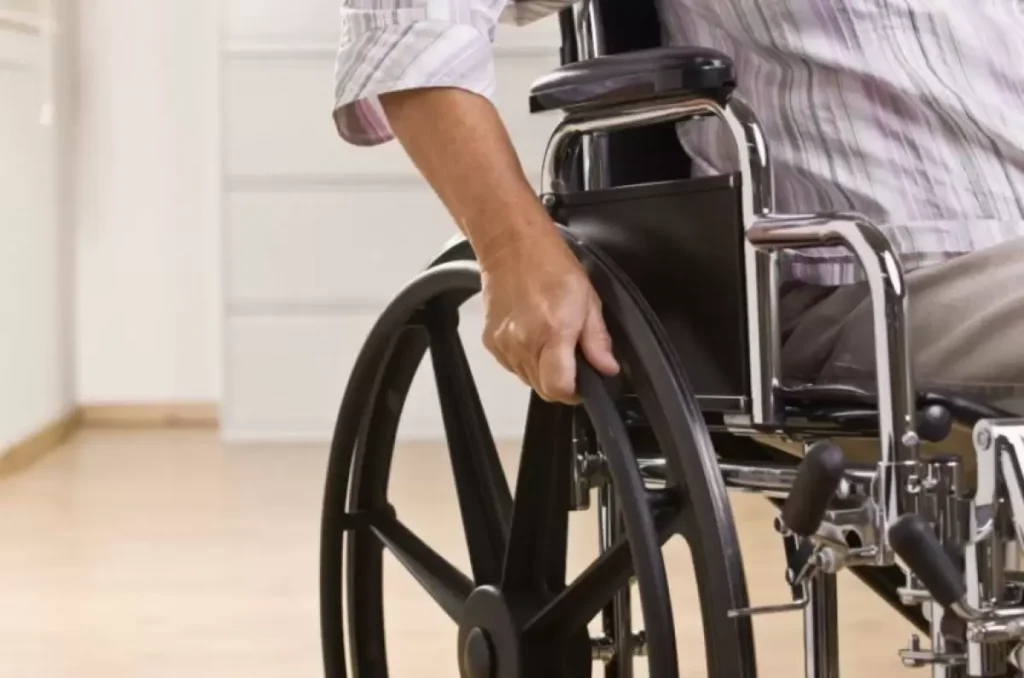
However, one group that requires special attention when it comes to inclusion, is disadvantaged in more fundamental ways – either mentally, physically, or in both. For such people, inclusion means something much more basic – an ability to more or less freely and independently interact with other people and the environment, do the basic everyday chores on their own, and have at least a minimum-wage job. Even such elementary benefits have only become available for people with disabilities (PWD) in recent history, and countries with the strongest socio-economic nets. In the rest of the world, PWD still live and suffer invisibly in society, being unable to consistently interact with anyone but their closest relatives and friends if they are lucky to have them. According to the WHO (2022), there are around 1.3 billion people with disabilities in the world, which represents 16% of the world’s population, demonstrating the scale of the issue of global inclusivity. Moreover, this group is expected to grow in the future, as the world’s population keeps getting older, and the elderly population has a higher chance of entering the ranks of PWD due to inevitable age-related failures of the human body.
Regarding the issues of inclusion of PWD in Kazakhstan, the discussion regarding those problems is still in its infancy. The country’s first-ever Concept of Inclusive Policy was adopted quite recently, on December 30, 2024. According to the Concept itself [Adilet.zan.kz, 2024], the previous history of state policy development in the field of inclusivity can be divided into three stages. During the first stage (1991–2000), in 1991, the Law “On Social Protection of Persons with Disabilities in the Republic of Kazakhstan” was adopted, which established the legislative framework for addressing disability-related issues. The second stage (2000–2010) saw the adoption of the laws “On Social and Medical-Pedagogical Correctional Support for Children with Disabilities” and “On Special Social Services,” as well as amendments to the Law “On Social Protection of Persons with Disabilities in the Republic of Kazakhstan.” This period emphasized rehabilitation of people with disabilities, and two state programs in this area were implemented. The third stage (2011–2020) focused on developing cooperation with public associations and aligning national legislation with international standards. It was during this stage that Kazakhstan finally ratified the United Nations Convention on the Rights of Persons with Disabilities on February 20, 2015. In addition, in 2014, Kazakhstan for the first time proclaimed the principle of non-discrimination on the grounds of disability and health status, which was incorporated into the Concept of Social Development of the Republic of Kazakhstan until 2030.
Despite the lengthy legislative history surrounding this issue, even individuals within the governmental system recognize that, thus far, most initiatives aimed at inclusivity have been largely declarative rather than actionable. Fundamental problems such as accessibility to urban and workplace environments, as well as access to high-quality medical services, remain unresolved [UNDP, 2022]. Statistics from the Doskaz platform support this claim; it is an online map developed by a consortium of local public organizations that provides information about the accessibility, safety, and comfort of public facilities for PWD and people with reduced mobility (PRM) [Doskaz.kz, n.d.]. According to the map, most public facilities in the republic are either partially accessible or entirely inaccessible. Transforming declarations from draft laws into concrete measures to enhance inclusiveness falls solely on local akimats, particularly regarding the inclusivity of public spaces and the environment.
However, most local governments do not demonstrate involvement in issues of inclusivity. For instance, in Almaty, the country’s biggest city, which is considered to be among Kazakhstan’s leaders in implementing inclusive initiatives [DKnews, 2024], such a crucial tool of cooperation as the Council for the Development of an Inclusive Environment that brings together the representatives of akimat, local NCOs, and public figures, was only created in February of 2024 [Turysbekov, 2024]. Currently, it is planned that by the end of 2025, 30% of social facilities will be adapted for PWD, and by 2030, 75% of facilities [Vecherkz, 2024]. Thus, currently, the situation in the most developed metropolis of the country leaves much to be desired. One of the examples that clearly illustrates the situation happened recently in the Almaty metro – a blind person was not able to distinguish between the open door of a train and a space between the trains, falling to his death into the gap [Tengrinews, 2024]. This incident sparked a reaction, and the administration of the metro quickly installed new protective structures [Zharbulova, 2025]. This situation demonstrates the typical reactive nature of local authorities in such scenarios.
In other cities and regions of the country, the status quo regarding inclusivity is not better, and in most of them, it is worse. For instance, according to the governmental platform inva.gov.kz (n.d.), there are more than 10,000 facilities in Almaty that are accessible or partially accessible for PWD, while several such facilities in other regions or cities of the republic do not even reach 4,000. For instance, there are only 1,707 accessible or partially accessible facilities in Astana, and fewer than 400 in the whole Ulytau region [inva.gov.kz, n.d.]. While the numbers seem to be inflated, the comparison between the regions is still viable and demonstrates that in some parts of Kazakhstan, there might be almost no PWD-friendly infrastructure whatsoever.
Assistance from society and government to PWD, when it comes to inclusive urban environments, should be multi-layered and comprehensive. There are numerous steps of different scales that can be integrated into governmental policies to ensure significant improvements in this regard. Firstly, in terms of general city planning, it is advised to focus on building compact, dense, mixed-use, and walkable cities, because such cities require shorter distance trips and are more comfortable to move in for PWD [Artieda et al., 2022]. Secondly, when it comes to transportation, it is important to make public transportation (PT) as accessible as possible for PWD. Installation of low-floors and other PWD-friendly infrastructure, provision of information through visual, auditory, and tactile means, usage of clear, large, and contrasting signage that can be easily understood by all, and training PT staff to help PWD are necessary. Thirdly, current efforts of local governments to modify existing public infrastructure in their cities should be continued and further expanded upon, making those efforts more systemic and proactive. Finally, to ensure the quality and sufficiency of the measures taken, all processes from planning to execution should be monitored and evaluated by independent non-governmental organisations that specialize in promoting and securing the interests of PWD.
It is important to note that the implementation of the measures listed above will benefit not only PWD but also the whole society in general. Any city that is comfortable for PWD is also comfortable for any average resident, because such cities are not car-oriented, they have calmer traffic, less car accidents, more comfortable and wider sideways for pedestrians, more convenient and accessible public transportation for elderly and kids, and more open and approachable public facilities for everyone. Therefore, advocacy in favor of the PWD-friendly urban planning should not fall just on the shoulders of a vocal and empathetic minority – the whole society should participate in the process of making our cities more just, inclusive, and comfortable, as everyone will be able to reap the benefits of such transformations in the long run.
References:
Adilet.zan.kz (2024). On approval of the Concept of inclusive policy in the Republic of Kazakhstan for 2025-2030: Resolution of the Government of the Republic of Kazakhstan dated December 30, 2024, No. 1143. Retrieved from https://adilet.zan.kz/rus/docs/P2400001143#z14. Accessed on 11.06.2025.
Artieda, Luis, Allan, Mackenzie, Cruz, Ramon, Shah, Sonal and Pineda, Victor Santiago (2022). Access and persons with disabilities in urban areas. Retrieved from https://itdp.org/wp-content/uploads/2022/02/Full-Report-jun21.pdf. Accessed on 10.06.2025.
DKnews.kz (2024). Almaty is among Kazakhstan’s leaders in implementing inclusive initiatives. Retrieved from https://dknews.kz/ru/v-strane/356181-almaty-v-chisle-liderov-kazahstana-po-vnedreniyu. Accessed on 12.06.2025.
Doskaz.kz (n.d.). About the map. Retrieved from https://doskaz.kz/en/about. Accessed on 13.06.2025.
Purdy, Elizabeth, Rholetter (2023). Poverty and social exclusion. EBSCO. Retrieved from https://www.ebsco.com/research-starters/political-science/poverty-and-social-exclusion. Accessed on 12.06.2025.
Social Protection of Persons with Disabilities (n.d.). Interactive map of accessibility. Retrieved from https://inva.gov.kz/ru. Accessed on 11.06.2025.
Tengrinews.kz (2024). Emergency in Almaty metro: video of a man falling appears. Retrieved from https://tengrinews.kz/kazakhstan_news/chp-v-metro-almatyi-poyavilos-video-s-padeniem-cheloveka-556725/. Accessed on 11.06.2025.
Turysbekov, Elaman (2024). Council for the Development of an Inclusive Environment Created in Almaty. Retrieved from https://www.inform.kz/ru/sovet-po-razvitiyu-inklyuzivnoy-sredi-sozdan-v-almati-a0bea0. Accessed on 11.06.2025.
United Nations Department of Economic and Social Affairs (2016). Report on the World Social Situation 2016. Retrieved from https://doi.org/10.18356/5890648c-en. Accessed on 11.06.2025.
United Nations Development Program (2022). Inclusiveness and accessibility on the path to a progressive society. Retrieved from https://www.undp.org/ru/kazakhstan/stories/inklyuzivnost-i-dostupnaya-sreda-na-puti-k-progressivnomu-obschestvu. Accessed on 10.06.2025.
Vecher.kz (2024). Inclusive Almaty: What measures are being taken in the metropolis to create a barrier-free environment? Retrieved from https://vecher.kz/ru/article/inkliuzivnyi-almaty-kakie-mery-provodiatsia-v-megapolise-dlia-sozdaniia-bezbarernoi-sredy.html. Accessed on 10.06.2025.
World Health Organization (2022). Global report on health equity for persons with disabilities: Executive Summary. Retrieved from https://iris.who.int/bitstream/handle/10665/364833/9789240063624-eng.pdf?sequence=1. Accessed on 12.06.2025.
Zharbulova, Nazgul (2025). New protective partitions have appeared in the Almaty metro — photo. Retrieved from https://kz.kursiv.media/2025-02-10/zhrb-mtr-per-rek/. Accessed on 12.06.2025.
Note: The views expressed in this blog are the author’s own and do not necessarily reflect the Institute’s editorial policy.